Can Caribbean farmers wean themselves from fertilizer imports? The issue vexes the agricultural sector, given high-energy costs and supply-chain disruptions. One answer could be locally-produced fish-waste fertilizer due to rich nutrient content.
Fish-waste fertilizer, in both solid and liquid forms, is well known in the farming business worldwide, but not commonly used in the Caribbean. One reason is that fish processing facilities may not have the scale to make this side business worthwhile, another is the presence of toxic metals in ocean-harvested fish. Lead and mercury, among other metals, are a growing scourge in Caribbean waters.
In Barbados, a project sponsored by the multilateral Caribbean Agricultural Research and Development Institute shows signs of success, in part because the role of a local fish-processing company. The Barbados-based firm now recycles about two-thirds of its fish waste for agricultural purposes. Early field trials suggest strong commercial uptake.
Agriculture in Barbados, while historically significant, is a comparatively small sector. Farming has been overshadowed by tourism and services in the modern era; it amounts to only about 5% of gross domestic product. Government policy there aims to increase food security. One important milestone: the public-sector Barbados Institute of Food and Agriculture is now in development, creating a central hub for education, research, and entrepreneurship. ■
Learn more at Barbados Today
© 2025 Cranganore Inc. All rights reserved.
Unauthorized use and/or duplication of any material on this site without written permission is prohibited.
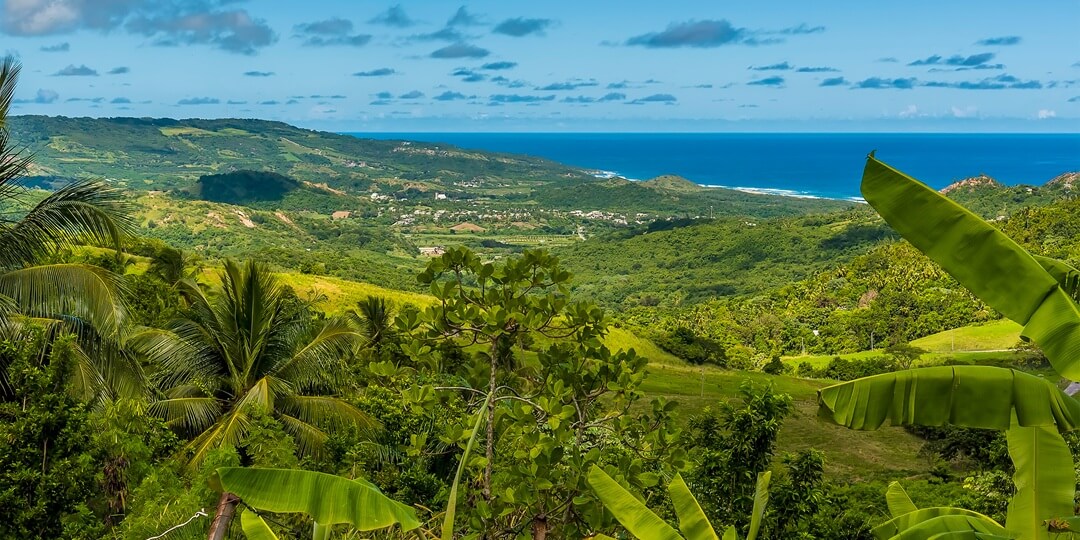
Image shows Barbadian topography. Credit: Nicola at Adobe Stock.